Our instruments are for Human Surgical use only. For Veterinary Instruments, visit GerVetUSA.com. For Human Dental instruments, please visit GerDentUSA.com. (Dismiss)

Shopping Cart

Total $0

We are a team of designers and developers that create high quality HTML Template & Woocommerce, Shopify Themes.

Currency
Language
My Account
Extra
10%
OFF
You have custom surgical sets, you can add more instruments in your sets or create more custom sets, once done you can order after making the required changes, click here to see your sets.

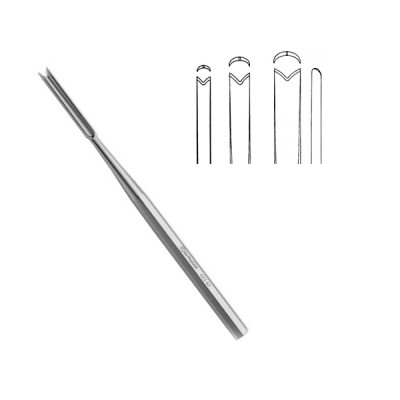
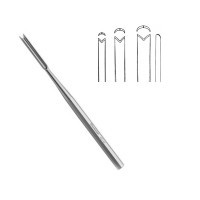
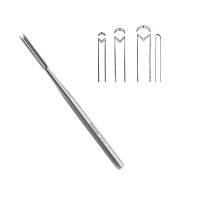
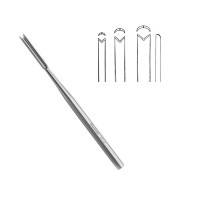
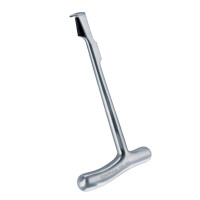
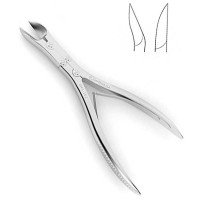
Hajek Septum Chisels

Hajek Septum Chisel 6" Small "V" Shaped 4mm Cutting Edge Tip

Hajek Septum Chisel 6" Medium "V" Shaped 6mm Cutting Edge Tip

Hajek Septum Chisel 6" Large "V" Shaped 8mm Cutting Edge Tip

SKU: HSC
Availability: In Stock

Hajek Septum Chisels are commonly used in orthopedic, rhinoplasty, and plastic surgical procedures. The instruments are crafted in multiple variations to help professionals in a wide range of surgeries. It is manufactured from premium-grade German surgical stainless material. So, it is reusable after sterilization.

SKU: G22-65
Availability: In Stock

Hajek Septum Chisel is used to shape bony edges.

SKU: G22-66
Availability: In Stock

Hajek Septum Chisel is used to shape bony edges.

SKU: G22-67
Availability: In Stock

Hajek Septum Chisel is used to shape bony edges.

Please select the size you want to order


$98.52
$60.26
$98.76
$60.26
$98.88
$60.26
Categories: Hajek Septum Chisel

Hajek Septum Chisel is an incredible instrument used to shape bony edges. It is commonly used in rhinoplasty, nasal constructive, plastic surgeries, and orthopedic surgical procedures. It features “V” shapes cutting edges that enhance the forward cutting effect. The small blade sharp edge is suitable for reshaping purposes. Our broad range of instruments has excellent patterns, sizes, and styles. The instruments are specifically designed from stainless material due to having high rustproof properties. 

GerMedUSA brings the topmost surgical instrument created while considering the need of every surgery. This tool can be used to bring monitoring and accessibility during the process. The instruments are all fine, durable, and sharp.

Overall instrument length is 6" and features a large "V" Shaped with a 4mm Cutting Edge Tip. These features make this instrument well-suited for a wide range of medical approaches.

Additional Information

Material:Stainless Steel

Overall instrument length is 6" and features a large "V" Shaped with a 6mm Cutting Edge Tip. These features make this instrument well-suited for a wide range of medical approaches.

Additional Information

Material:Stainless Steel

Overall instrument length is 6" and features a large "V" Shaped with an 8mm Cutting Edge Tip. These features make this instrument well-suited for a wide range of medical approaches.

Additional Information

Material:Stainless Steel

The Hajek septum chisel is primarily used in septoplasty, rhinoplasty, and nasal reconstruction procedures. Surgeons rely on it whenever the nasal septum requires precise reshaping, realignment, or removal of deviated bone and cartilage sections.

The chisel works by applying controlled, directed force to cut through or lift the septal bone and cartilage cleanly. Its angled blade design allows the surgeon to reach deep nasal structures without causing unnecessary trauma to surrounding tissue. By tapping it gently with a mallet, the surgeon can precisely separate and mobilize the deviated portions of the septum.

This chisel comes in three standard sizes small (4mm), medium (6mm), and large (8mm) cutting edge tips all featuring a "V" shaped design on a 6-inch handle. Each size serves a specific purpose, with smaller blades offering precision in tight nasal spaces and larger ones covering broader areas of bone and cartilage. Surgeons choose the right size based on the patient's anatomy and the complexity of the procedure.

In septoplasty, accurately removing or repositioning deviated bone is critical to restoring normal airflow, and this chisel makes that process safer and more controlled. Its fine, beveled edge minimizes tissue damage while delivering clean cuts through the perpendicular plate and vomer. Without a reliable instrument like this, achieving a well-aligned septum with minimal bleeding would be far more difficult.

One of the biggest mistakes is applying too much force, which can fracture surrounding structures or perforate the septal mucosa. Surgeons should always ensure the blade is properly positioned and angled before striking, as a misaligned chisel can damage adjacent cartilage or the cribriform plate. Keeping the instrument sharp and clean is equally essential, since a dull or contaminated blade increases both surgical trauma and infection risk.